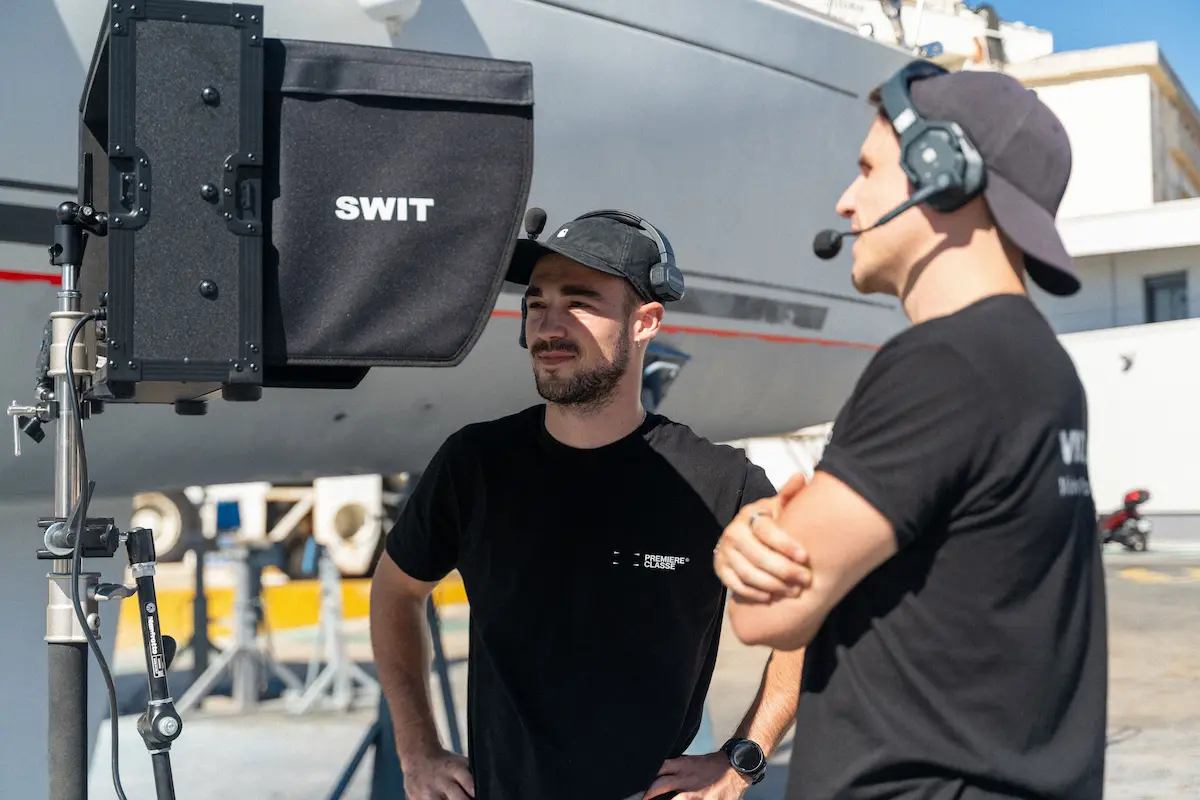
Corporate video in Toulouse: how much does it cost and how to properly brief
Corporate video in Toulouse: prices, timelines, pitfalls to avoid. A simple method to get quality content that lives up to your marketing challenges

Introduction:
If you type corporate video in Toulouse, you quickly come across quotes that vary tenfold. Great. Except that doesn't help you get a budget approved, or choose the right level of production.
A corporate video is a tool that matters as much internally as externally. To reassure, build credibility and sometimes convert. So the real question isn't “how much does it cost”, it's: what do we need to deliver, for which channel, with what level of standards.
In this article, we give you a simple method: understand the cost items, estimate the timelines and write a brief that's on point.
Before the budget: what your corporate video is for
Before talking price, we need to talk use. Otherwise you'll do the most common thing: produce an “OK” video… and not know where to put it.
A corporate video isn't meant to please everyone. It must serve a specific moment in the journey: a visitor who is hesitating, a candidate comparing your company with others, a prospect who wants to be reassured.
In Toulouse, you can shoot easily. The real question is: what should this video trigger, and on which channel.
The 4 most profitable uses: website (reassurance), LinkedIn (credibility), recruitment (employer brand), ads (light retargeting).
The website (reassurance)
This is the most common case: home page, “About” page, “Services” page. Here, your video answers one simple question: “Can I trust you?”
What works:
- a clear message (who you are + who you serve + what you do)
- proof (figures, past work, process, clients)
- a human tone (not an advertising voice-over)
LinkedIn (credibility)
On LinkedIn, a corporate video isn't there to “tell the company's story”. It's there to make a promise credible.
What works:
- a direct opening (the customer's problem)
- a short, clean structure
- subtitles (yes, even in B2B)
- 9:16 cut-downs if you repost in vertical
Recruitment (employer brand)
For a recruitment video, the goal isn't to sell “a culture”. The goal is to reduce uncertainty.
What works:
- show the reality (pace, environment, team)
- concrete, real-life quotes
- a typical day
Ads (light retargeting)
In ads, a corporate video is mostly useful when the person already knows you a little: retargeting (at the bottom of the funnel).
What works:
- a “proof” angle (results, a method, a before/after)
- a short version (20–30s at the very most)
- a link to a conversion landing page, for example
The classic trap: “making a video” with no channel and no objective, and so a video that serves no purpose.
The trap is to say “We're making a corporate video” without specifying where it will be shared
Result:
- a length that suits no channel,
- a tone that's too institutional,
- a film that talks about you… instead of talking to the prospect.
If you only write one sentence in your brief, make it this one:
This video must serve to [objective] on [channel], for [target], in order to [expected action].
Without this sentence, you're paying for production. Not a strategy, and that's not what we're after. At Première Classe, this is what we stand for, loud and clear: we're here to provide a creative commercial solution (video is only a tool)
Corporate video in Toulouse: the three production levels (and what they include)
Let's talk production levels, but properly.
In Toulouse, you can find services at every level. The problem isn't the price gap. The problem is the gap in content behind the price.
So here are three levels. Not to talk negotiation, but to understand what you're deciding to invest in.
Small, well-framed format: interview / testimonial / short capsule, light crew, simple post-production.
The budget: the most accessible of the three, but it always depends on context, objectives and deliverables. A video is impossible to price correctly without them, which is why every project is quoted individually.
What it covers, most of the time:
- 1 half-day or 1 day of shooting
- a very light crew (often 1 person, sometimes 2)
- simple post-production: editing, basic graphics, export
When it works very well:
- a simple interview with “premium” B-roll shots
- a customer testimonial
- a fairly short “presentation” capsule
- internal content
“Serious” corporate film: pre-production, better-controlled shoot, sound + color grading, 2–4 cut-downs.
The budget: a real step up from the small format, because pre-production, sound and color grading come into play. The exact amount depends on context, objectives and deliverables.
What really changes at this level:
- pre-production (even light)
- a much better controlled shoot
- more serious post-production
- 2 to 4 cut-downs (e.g. master + 1 vertical + 1 cut-down + subtitles)
This is the “comfort” level for a marketing manager: you invest in a marketing film that is usable across your channels, with quite a few deliverables included
Premium level: art direction, staging, several locations, graphics, full pack of deliverables.
The budget: the highest of the three, depending on the setup (locations, crew, staging, deliverables pack). More than ever, pricing is done on a quote, after a first conversation.
We're no longer talking about “a nice interview”. We're talking about a corporate video that carries an image.
What you pay for on top:
- art direction
- more elaborate staging
- a fuller crew
- a much more complete pack of deliverables, adapted to your objectives
When it makes sense:
- a “brand” video meant to last 12–24 months,
- a premium B2B campaign (website + LinkedIn + ads),
- fundraising / strategic recruitment
- repositioning.
The trap to avoid: paying “premium” for a video that has no message. At this level, pre-production is non-negotiable.
We also cover advertising film pricing
What makes a quote vary (the line items that really matter)
Two quotes can both say “corporate video” and yet have nothing in common.
The difference doesn't come from a “style”. It comes from the invisible items: pre-production, level of the shoot, post-production (and above all the deliverables).
If you need to get a budget approved, or compare two proposals in Toulouse, read this section as a checklist. You'll immediately see what's included… and what will come as an extra, ha
Pre-production: where half of the project is won
Pre-production is what many people skip because “we'll figure it out on site”. And that's exactly how you end up with a shoot that drags on, an edit that goes in every direction, then a V1 that triggers 12 feedback rounds.
In concrete terms, clean pre-production means:
- a clear objective (what the video must trigger)
- a message (1 promise, 1 proof, 1 angle)
- a structure (running order, questions, voice-over if needed)
- a list of deliverables (lengths, formats, subtitles, cut-downs)
- a shooting plan (even a simple one)
What it changes for you:
- less stress.
- fewer feedback rounds
- less mental load
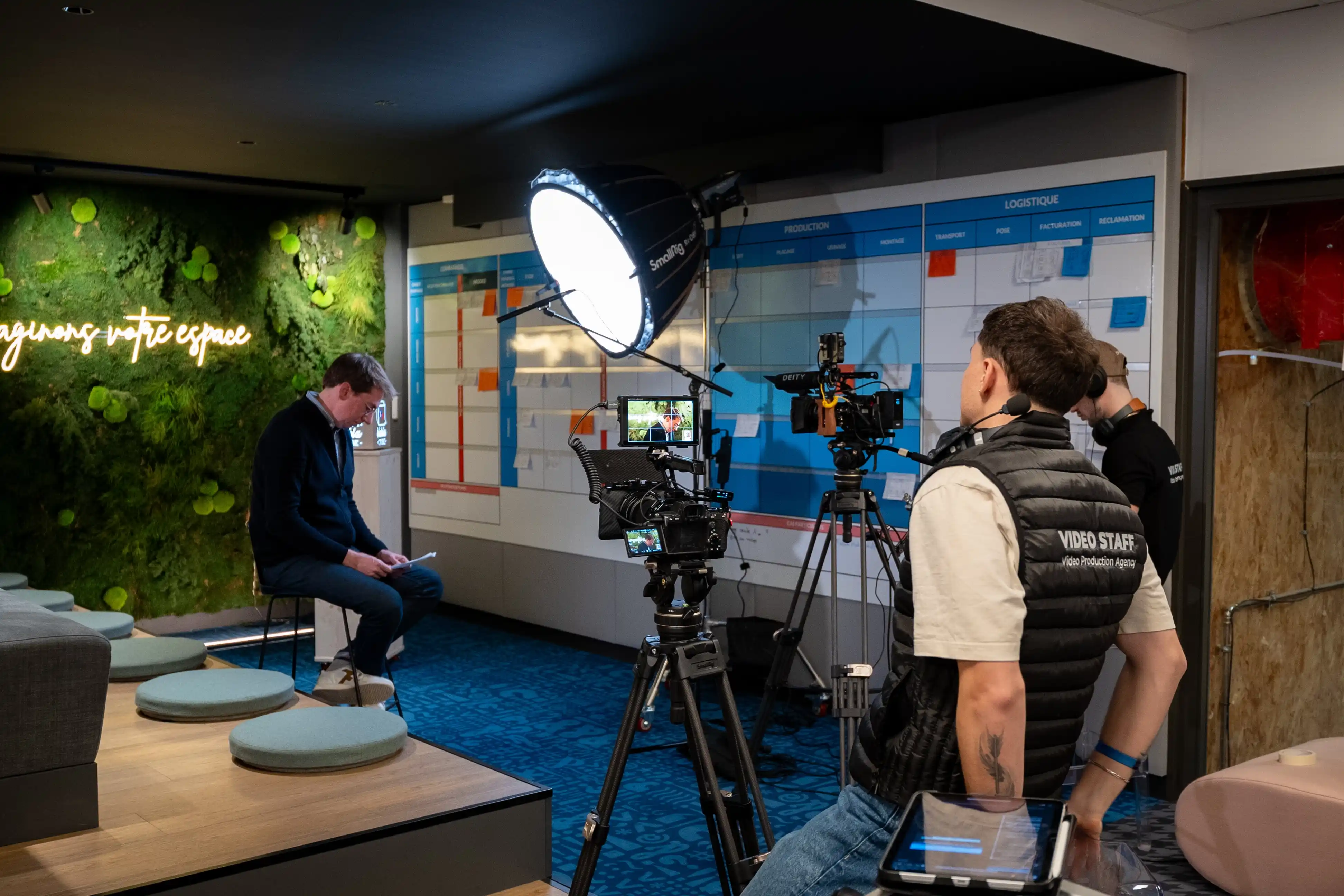
The shoot: crew, lighting, sound, logistics (the real difference)
Logistics may seem “easy”. But the quote mainly shifts on 4 levers: crew size, lighting, sound, organization.
- Crew size
- 1 person: efficient, but everything rests on one person's energy.
- 2–3 people: smoother, more stable, more leeway for the unexpected.
- a larger crew: useful as soon as you have several locations, several speakers or a premium result.
- Lighting (we won't get technical here)
- Sound (not here either)
- Logistics
- location scouting
- setup time
- speakers' schedules (for example)
Post-production: editing, sound design, color grading, deliverables
This is where surprises happen, but very often, if things get stuck at this stage, the agency or your provider is largely responsible
- Editing: editing time explodes when:
- the shoot wasn't properly framed,
- Sound design (we won't get technical here)
- Color grading (not here either)
- Subtitles and graphics (nor here)
- Exports / deliverables
Everything this project includes in terms of deliverables must be listed upfront.
At this stage, if you want a simple basis for comparison: two quotes aren't compared on price. They're compared on the clarity of the deliverables, the feedback rounds and the rights.
The brief that avoids 15 back-and-forths (and protects your budget)
The brief, and I know what I'm talking about, is the holy grail for us. It's what stops the video from going in every direction and the project from being poorly framed.
The information to give from the start: objective, target, channel, message, CTA.
What you need to write down in black and white (even if it's short):
- Objective: what should the video trigger? (reassure, build credibility, recruit, convert).
- Target: who is watching? (B2B prospects, candidates, partners, etc.).
- Channel: where will the video live? Website, LinkedIn, YouTube, landing page, ads.
- Message: one simple sentence
- CTA: what action at the end? (book a meeting, apply, request a quote, download a PDF)
If you want an ultra-simple template, use this:
This corporate video must serve to [objective] on [channel], for [target], in order to [action].
Example (real, effective):
This corporate video must serve to reassure B2B marketing decision-makers about our expertise, on the website and on LinkedIn, so that they book a meeting.
What to provide: brand guidelines, examples, legal/brand constraints, speakers.
The sooner you provide that, the more time you save
- Your brand guidelines: logo, fonts, colors, usage rules.
- 2–3 examples: to understand your expectations and inspirations, even if it's our role to guide you
- Brand constraints: banned words, mandatory notices, sensitive topics
- Legal constraints, if any: product claims, regulated sectors, internal approval
- The list of speakers
- The project lead: the person who needs to be involved with us from start to finish
- Locations: on your premises in Toulouse? Several sites? Need for a more neutral setting?
Important point: don't try to lock everything down on your own. Provide the elements; on our side, for example, it's during the pre-production workshops with our teams that we fine-tune the rest. But at least we start from a sound, solid base
The list of deliverables
This is the point that prevents surprises.
If you don't list the deliverables, you are buying “a video”. And “a video” doesn't mean anything.
The minimum to define:
- Length of the master: 60–90s? 2 minutes?
- Formats: 16:9 (website/YouTube) and/or 9:16 (social)
- Subtitles: yes/no (for LinkedIn, the answer is often yes)
- Cut-downs: 15–30s, a cut-down per use, ad versions if needed
A “simple but smart” pack often looks like this:
- 1 16:9 master
- 1 9:16 version
- 2 cut-downs (15–30s)
- subtitles depending on the channel
Comparing two quotes in Toulouse: checklist and warning signs
When you compare two quotes in Toulouse, the natural reflex is to look at the total. And that's normal.
But if you do that, you're often comparing two different things:
- on one side, a service
- on the other, a full setup with pre-production, project management and a pack of deliverables.
The right comparison is: process + deliverables + timelines
I can guarantee that it's sometimes better to present your managers with the highest quote, the one that will cause you the fewest problems (normally)
Comparison checklist: process, milestones, deliverables, feedback rounds, rights.
Here's what you need to find in black and white. If it's not written down, consider it not included.
1) The process
- Who is in charge?
- Is there pre-production (running order, questions, structure)?
- Are there approval milestones (at Première Classe, we call them pre-production workshops)
2) Deliverables
(I won't repeat myself, I think you've got it by this point in the article)
3) Feedback rounds
- How many feedback rounds are included?
- How do you send your feedback?
4) Rights
- Music: license + scope of use
- Speakers: image rights / contracts if needed
- Assignment: duration / territories / media
5) Timelines
- Shooting date
- V1 date
- Turnaround time for feedback
- Final delivery date
Conclusion
A high-performing corporate video takes preparation
You're buying a marketing tool, with clear deliverables, a working framework and distribution planned from the start.
The 3-point summary
- Define the use before the budget
- List the deliverables
- Frame the process
The right choice
The right choice isn't “the cheapest”. It's the one that delivers a usable video and zero gray areas during the preparation phase
And if you're still hesitating: in 90% of cases, the factor that changes everything is pre-production.
Next step
Write one sentence. Just one. And you'll already have a better brief than most projects.
This corporate video must serve to [objective] on [channel], for [target], in order to [action].
Only then do you ask for quotes.
If you're looking for a team in Toulouse for a well-framed, marketing-driven corporate video, you can book a meeting with Première Classe
Written by Max from the Première Classe agency
video agency
enter the era of unforgettable videos.
Toulouse, France
13h00
GMT+1
Toulouse, France
13h00
GMT+1
Los Angeles, USA
04h00
GMT-8
Lisbon, Portugal
12h00
GMT+0
Moscow, Russia
15h00
GMT+3